
Rituals & art forms
Living Traditions of
Tulunadu Coast
Spirit worship, dance-drama, harvest festivals, and serpent shrines — centuries-old traditions still woven into daily life around Malpe Beach and Udupi, all within easy reach of Silver Sands.
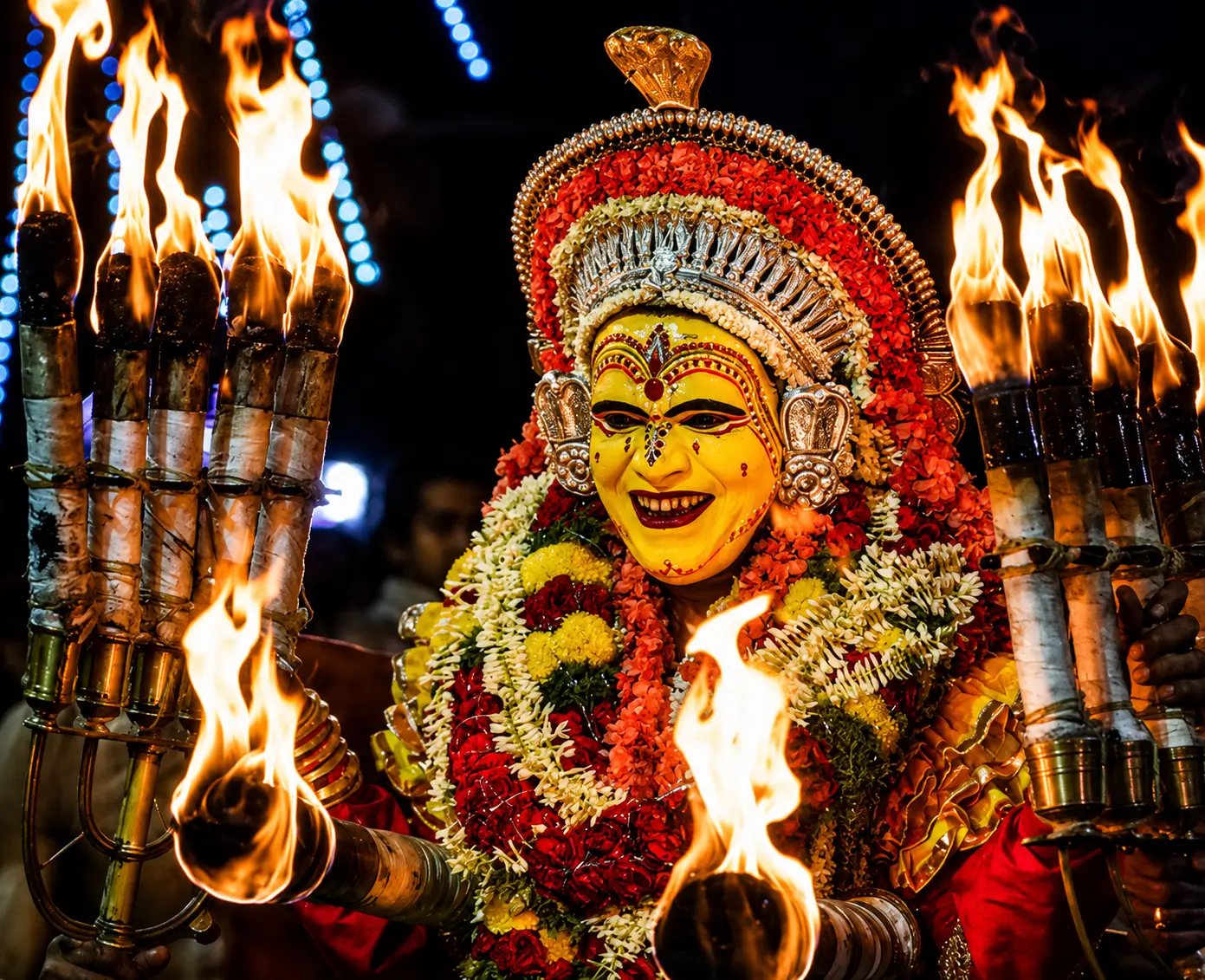 Bhoota Kola
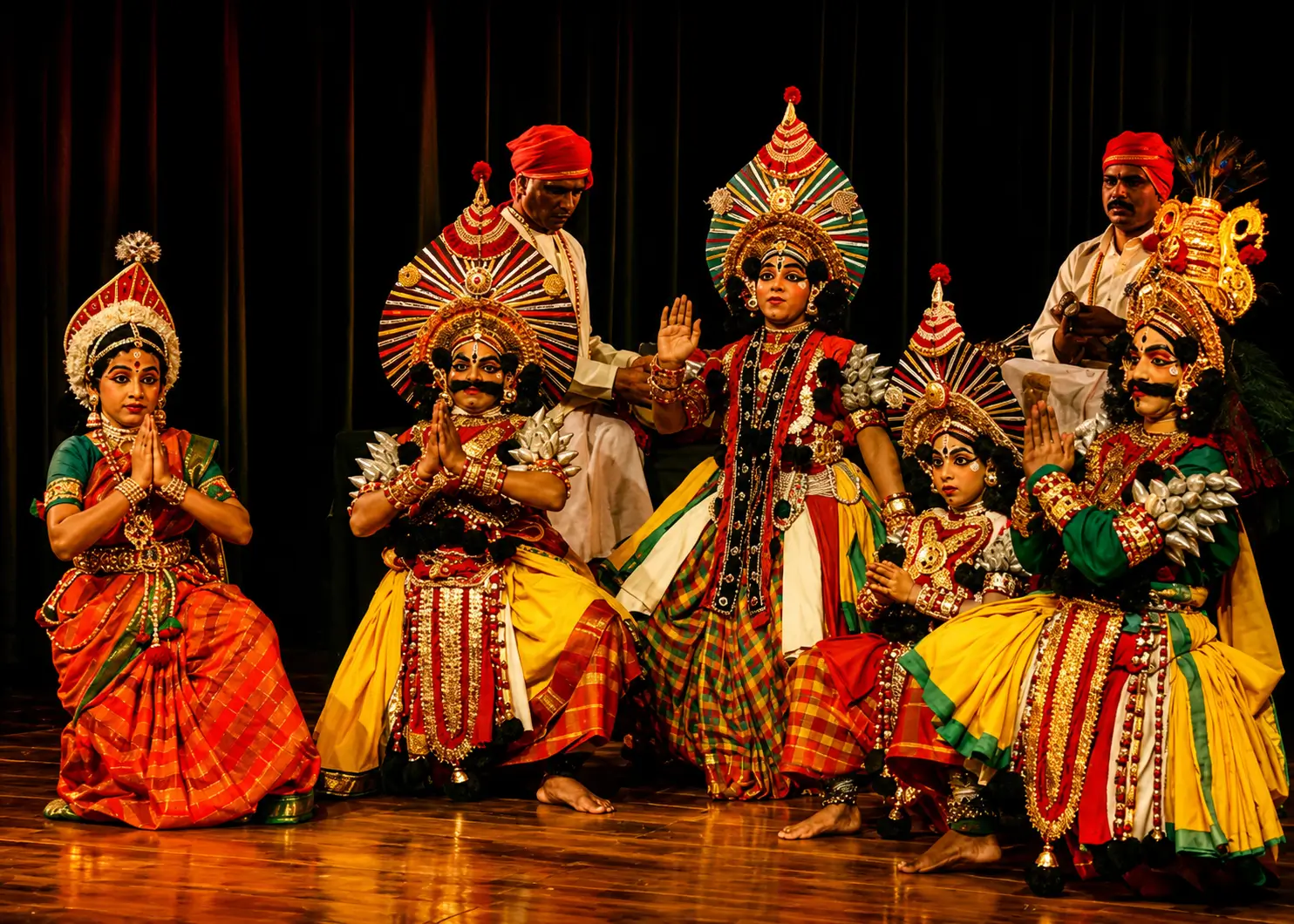 Yakshagana
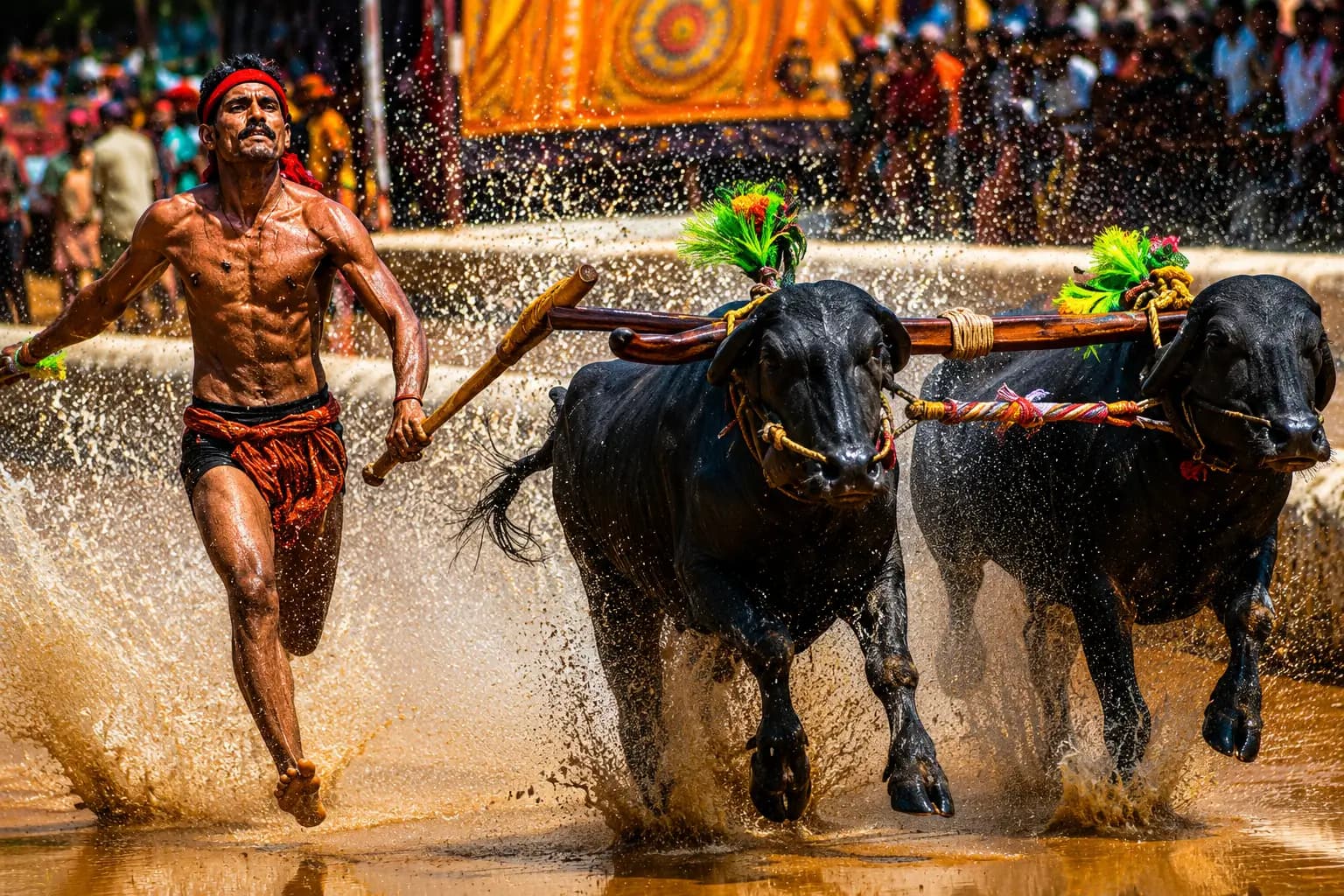 Kambala
Bhoota Kola
A ritual spirit-worship performance unique to Tulunadu, where a performer embodies a local deity (bhoota) through elaborate costume, face paint, and trance-like dance, believed to bring blessings and settle disputes in the village.
Typically held between November and May in family compounds and village shrines. Ask us — we can help you find a local ceremony during your stay.
Yakshagana
A centuries-old dance-drama combining music, dance, dialogue, and vividly colourful costume and makeup, traditionally performed through the night, retelling stories from the Hindu epics.
Troupes perform across Udupi district from November to May. Silver Sands can arrange evening trips to performances nearby.
Kambala
Traditional buffalo races held in flooded paddy fields after the harvest, where pairs of buffaloes are raced through mud tracks — part sport, part harvest celebration, drawing huge local crowds each season.
Kambala season runs from November to March. Venues within 30 km of Malpe are common and spectacular to attend.
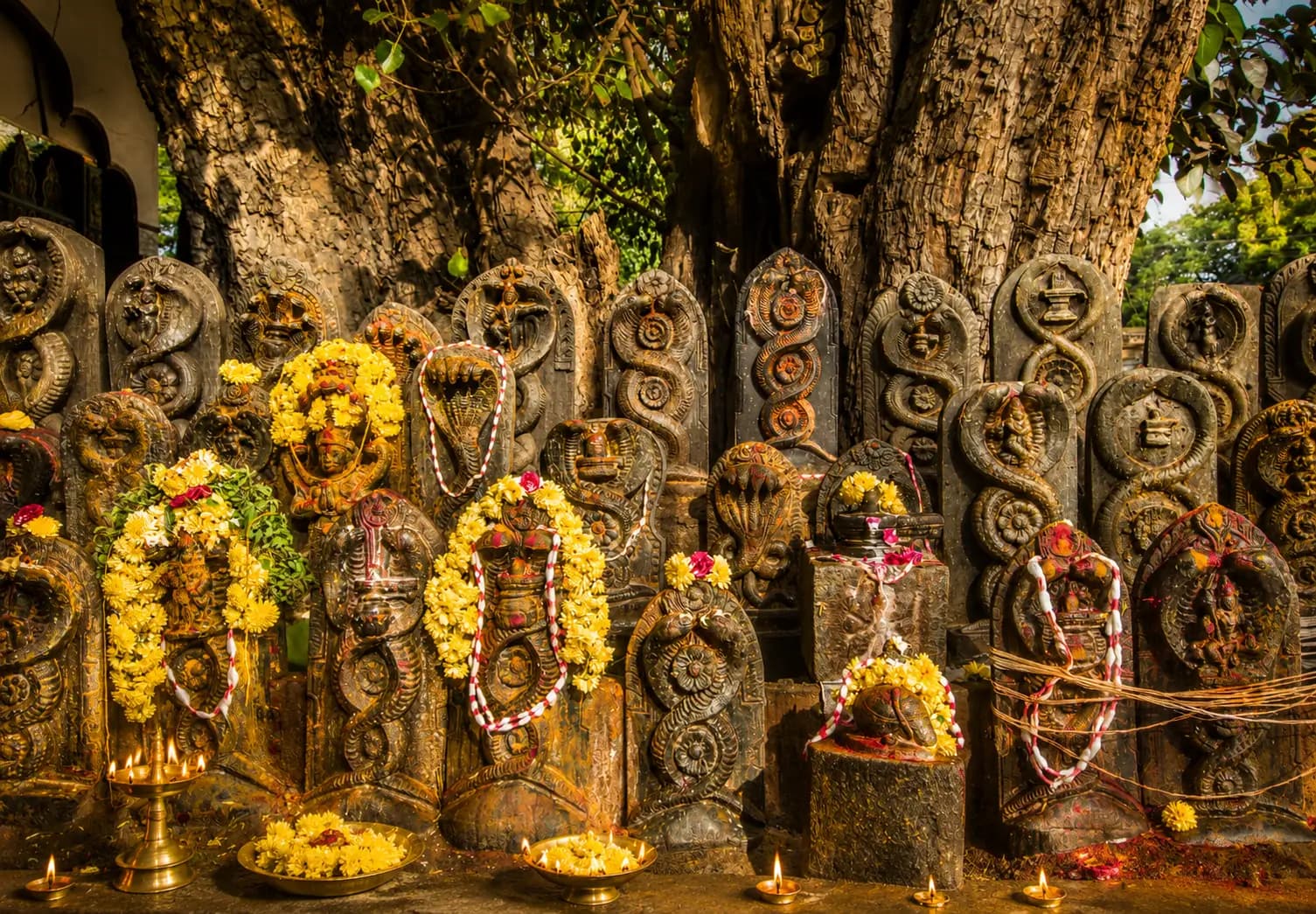
Nagaradhane
Serpent worship rituals held at sacred groves and naga stone shrines found throughout the region, reflecting the deep reverence for nature woven into Tulunadu's spiritual life.
Sacred naga shrines (nagabana) can be found within the grounds of many traditional homes and temples across Udupi.
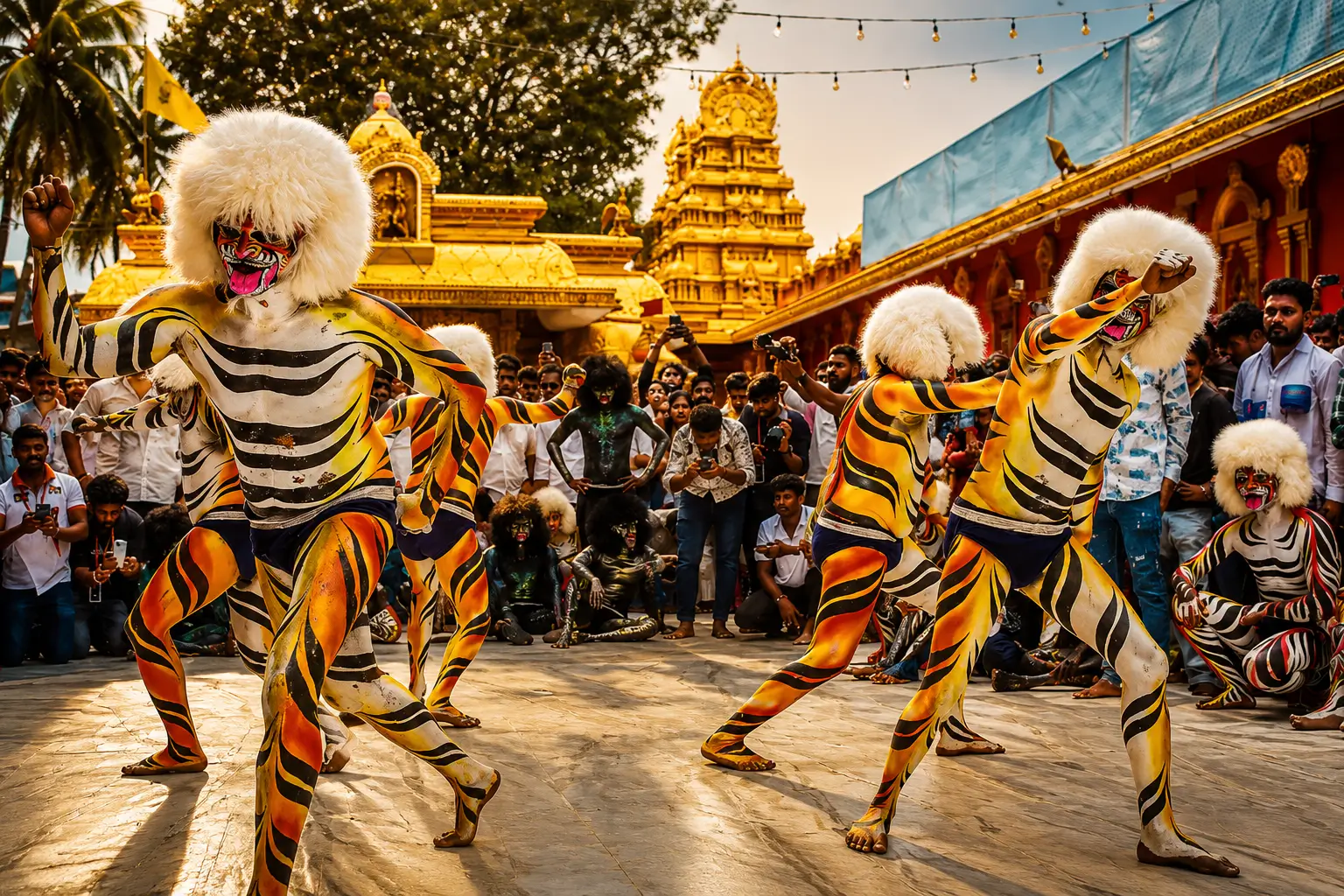
Hulivesha
The 'tiger dance' — performers paint their bodies as tigers and dance through the streets to drumbeats during festivals, a striking and energetic street tradition unique to coastal Karnataka.
Most commonly witnessed during the Dasara and Navratri festivals, especially in Udupi and Mangalore.
Aati & the Tulu Calendar
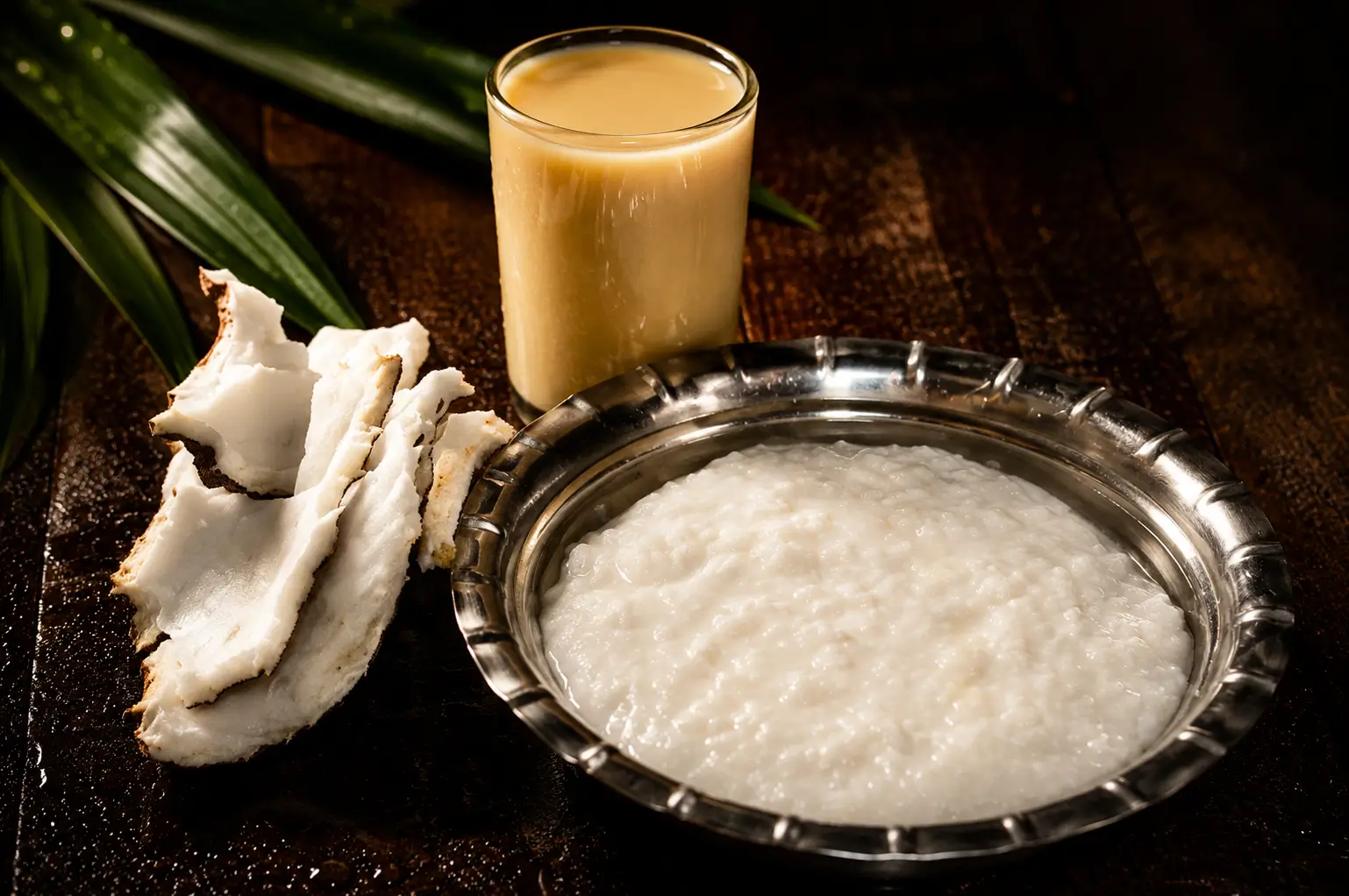
The Tulu calendar runs independently of the mainstream Indian calendar, with the monsoon month of 'Aati' marked by specific herbal remedies, folk songs, and rituals still observed in coastal households.
Aati falls in July–August. Many local families still follow the Tulu calendar for festivals, making this a unique monsoon cultural experience.
Continue exploring
Every tradition has a dish to match
The same coastal culture that shapes Yakshagana and Bhoota Kola also shapes what goes on the plate — discover Tulunadu cuisine next.